RiskFire Newsletter 


By Eve McSherry 18 December 2025

 A Year of Recognition

This year brought some proud moments for the RiskFire team. We were finalists in the SME Awards, recognising our growth and commitment to quality as a developing business.

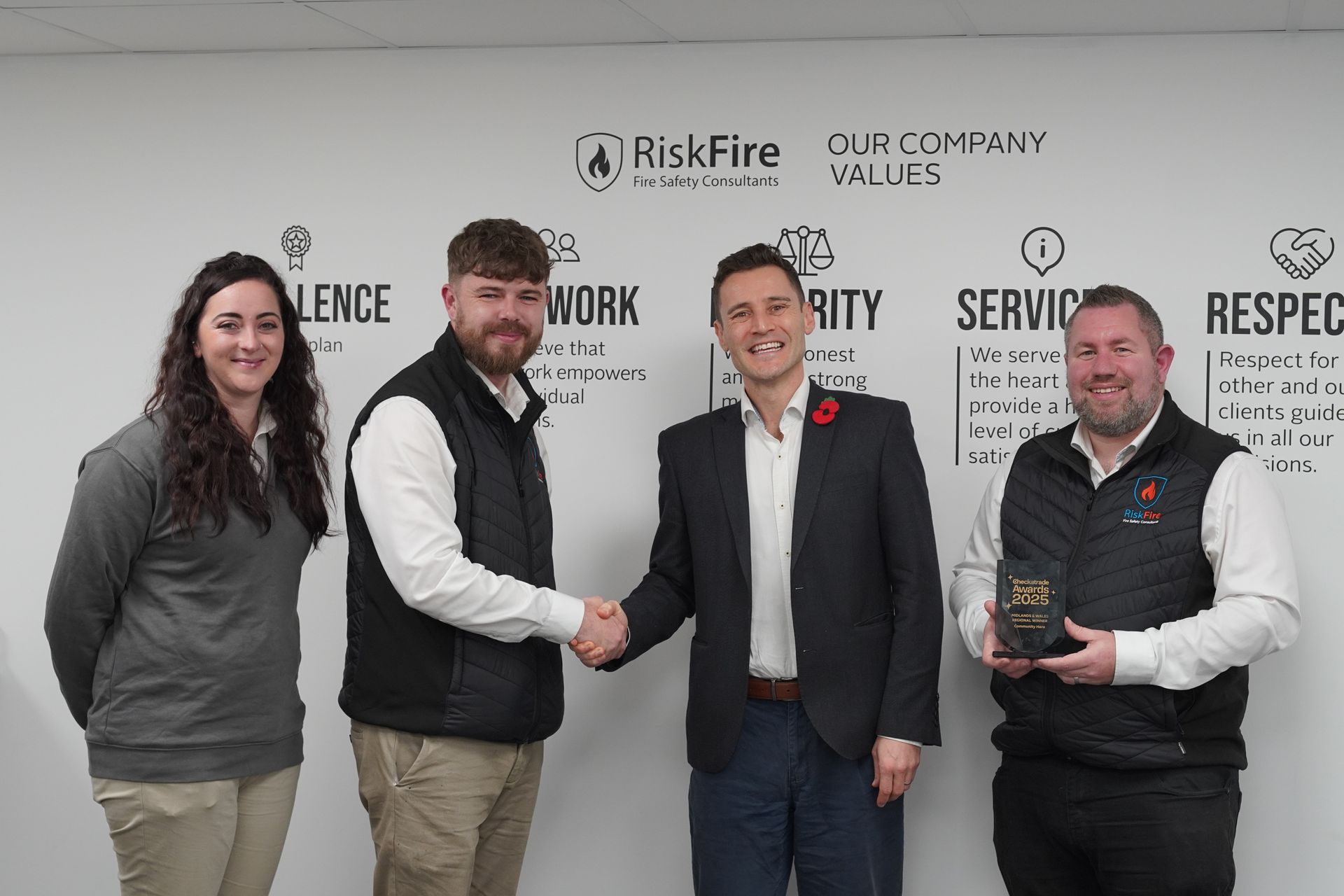
We were also delighted to be named Checkatrade Regional Winners for the Community Hero Award, presented at the regional awards ceremony hosted at Villa Park. This recognition means a great deal to us, as it reflects the time and effort our team puts into supporting local communities alongside delivering high standards of fire safety work. Being acknowledged in this way reinforces our belief that doing good work should go hand in hand with doing the right thing.

Community at the Heart of What We Do

Giving back remains important to us. This year included charity days supporting the Phoenix Children’s Foundation, a donation to Sir John Moore C.E. Primary School to help fund a school trip to the pantomime, and the delivery of Winter Warmer Hampers in partnership with Niblock, supporting people in the local community during the colder months.

These initiatives reflect our commitment to building social value into the way we operate, working alongside partners and communities to make a positive difference where we can.

People packing items at a table in a brightly lit room. A woman smiles while working.

RiskFire HQ

2025 marked an important milestone for RiskFire with our move into a new office space. As the business has grown, it became clear that we needed an environment that better supports collaboration, planning and the day-to-day running of a growing team.

It’s a space designed to support our people, strengthen collaboration and help us deliver our work to the highest standard.

Chosen as a Trusted Partner

We were pleased to secure several key contracts this year, including tender awards with Vico Homes and the States of Guernsey. These successes represent important milestones for RiskFire and reflect the strength of our technical submissions, compliance-led approach and growing reputation across the sector.


A special thank you to Derryn our Bid And Proposal Cooridnatior, whose commitment and persistence played a key role in making these tender wins happen.

Exterior of Vico Homes building with a dark pickup truck parked in front.
Man with crossed arms in front of a blue and red shield logo with a flame.

Growing Leaders from Within

2025 has been a year of significant team growth, with new roles added across the business to support increasing demand and expand our expertise.

We’re also proud to share that Stuart was promoted to Head of Consultancy. This reflects both his experience and the trust our clients place in our consultancy services. His leadership strengthens our technical capability and supports the continued development of the wider team.

A Fresh Look for RiskFire

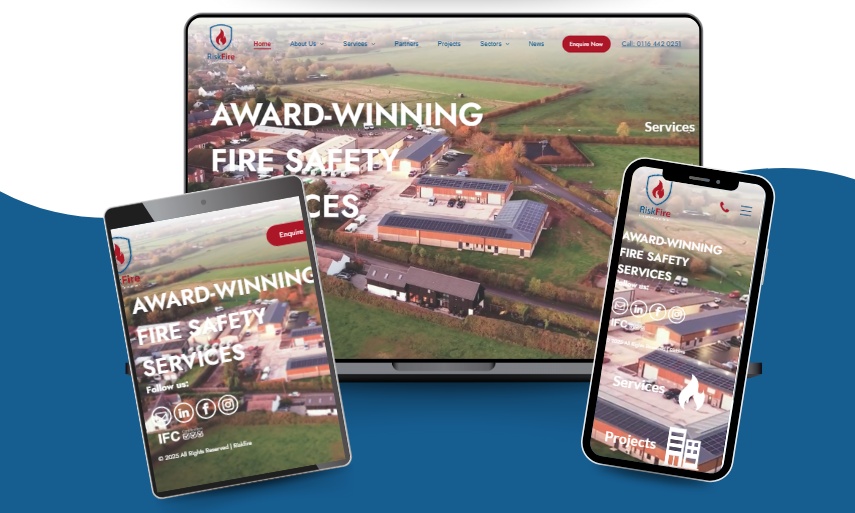
We were pleased to launch our new RiskFire website this year — an important milestone for the business. The site has been refreshed with clearer content and a more intuitive layout, designed to feel more personal and better tailored to each client’s needs.

Whether you’re making an enquiry, looking for information, or seeking support, everything is now easier to find and navigate. We’re proud of this step forward and excited about how the new site will help us deliver even better service and support moving into 2026.


A big thank you to Eve our Marketing Assistant, whose hard work and attention to detail played a huge part in bringing the new site to life.


Website mockup showcasing award-winning fire safety services on a laptop, tablet, and smartphone.

Small Actions, Long-Term Impact

Sustainability has been a real focus for us this year. In 2025, we formally joined the SME Climate Hub, committing to measure, reduce and improve our environmental impact as the business continues to grow.

Alongside this, we continued our tree-planting initiative in partnership with the National Trust, donating a tree for every qualifying fire door project we complete. It’s a simple but meaningful action that supports the restoration of natural habitats and reflects our belief that responsible business is about consistent, practical steps – not box-ticking.

This is an area we’re excited to build on further in 2026.

Four people shaking hands in front of a company values wall. Two hold awards.
Entrance to the F1 Arcade in a modern building; a sign with the logo is above the doors.

Ending the Year on a High Note

To wrap up a busy year, we headed to Birmingham for our Christmas team day. The day kicked off at Clue HQ, where teamwork (and a bit of competitive spirit) was put to the test in the escape rooms, before moving on to the F1 Arcade for some fast-paced racing and plenty of laughs.

It was a great way to celebrate a big year and the people behind it — because a strong team is at the heart of everything we do.



Sign Up For Our Newsletter

Sign up to get industry insights, trends, and more in your inbox.

Contact Us

SHARE THIS


Two workers in high-vis vests install a white door in a hallway. One crouches, the other stands.
by Ben Smith 26 January 2026
The Importance of Continued Fire Door Maintenance
Person writing on a scantron test with a pencil, wearing a white sweater.
by Ben smith 5 November 2025
A Fire Strategy Report is a comprehensive "master plan" that details the entire fire safety approach for a building. It's a foundational design document, distinct from a routine Fire Risk Assessment, that is essential for new builds, major refurbishments, or a change of use. Our report provides a holistic blueprint, outlining everything from evacuation plans and smoke control to compartmentation, ensuring all safety systems work together to achieve full legal compliance and protect the building and its occupants. Navigating Your Duties: Beyond the Fire Risk Assessment As the 'Responsible Person' under The Regulatory Reform (Fire Safety) Order 2005, you carry the legal duty for the safety of your premises. This responsibility is significant, and the cornerstone of managing it is often seen as the Fire Risk Assessment (FRA). However, the FRA is only one piece of the compliance puzzle. For many buildings—especially those that are new, complex, or undergoing significant changes—a far more fundamental document is required: the Fire Strategy Report. While an FRA assesses the current state of an occupied building, a Fire Strategy Report is the high-level blueprint that dictates how the building is designed and built to be safe from the outset. It is the master plan that justifies every fire safety decision, from the type of alarm system to the materials used in the walls. Our guide explains what a Fire Strategy Report is, why it differs critically from an FRA, and when you are required to have one to meet your legal obligations and achieve building regulations approval. What is a Fire Strategy Report? A Fire Strategy Report (FSR) is a detailed, single-document that provides a complete overview of all the fire safety measures, systems, and procedures within a building. It is a "living document" in the sense that it is created at the design stage and should be updated throughout the building's life to reflect any changes. The report provides a holistic and robust justification for the building's fire safety design. It explains why certain decisions were made and how all the different safety components work together as a single, cohesive system. A comprehensive FSR, developed by a competent fire safety expert, will typically include: Building Information: A full description of the building's construction, dimensions, layout, and, critically, its intended use and occupant characteristics. Legal Framework: The specific legislation, standards, and guidance (e.g., Approved Document B) used to inform the design. Evacuation Strategy: This is a core component. It details how people will escape from a fire. This could be a simultaneous evacuation, a phased evacuation (common in large, multi-storey offices), or a "Stay Put" policy (common in modern blocks of flats). Compartmentation: A detailed breakdown of the building's passive fire protection (PFP) strategy. It outlines the locations of fire-resistant walls and floors to contain a fire at its source and protect escape routes. Active Fire Systems: Details on all "active" systems, including: fire detection and alarm systems, emergency lighting, smoke control systems, such as Automatic Opening Vents (AOVs), and fire suppression systems, like sprinklers (if applicable). Fire Service Access: Provisions for firefighting, including access routes for fire engines, locations of hydrants, and internal firefighting lifts or risers. Fire Safety Management: An overview of the management procedures required to maintain all the above systems and ensure the strategy remains effective once the building is occupied. This report is the "why" behind your building's safety. It serves as the benchmark against which all future fire risk assessments, installations, and maintenance should be evaluated. The Critical Difference: Fire Strategy Report vs. Fire Risk Assessment This is the most common point of confusion for a Responsible Person. Understanding the difference is vital, as you may need to use one or both to ensure legal compliance. Think of it this way: The Fire Strategy Report is the manufacturer's design manual for the car, explaining how the engine, brakes, and airbags are designed to work together. The Fire Risk Assessment is the annual MOT certificate—a snapshot in time that inspects the car's current condition to ensure it's still roadworthy. Here is a clear breakdown: Fire Strategy Report (FSR) Purpose: A design and compliance blueprint. It sets the standard for the building. When: Created at the design/construction phase or during major changes (refurbishment, change of use). Focus: How the building is designed to be safe. It justifies the selection of materials, systems, and layouts to meet building regulations. It is a strategic document. Fire Risk Assessment (FRA) Purpose: A legal review of operational safety. It checks the building against the required standards. When: A legal requirement for virtually all non-domestic premises. It must be conducted regularly (usually annually) and reviewed whenever there is a significant change. Focus: How the building is currently being managed and operated. It identifies fire hazards, evaluates the condition of existing safety measures (like those defined in the FSR), and assesses the risks to people, recommending any necessary improvements. In an ideal scenario, the person conducting your Fire Risk Assessment will use the Fire Strategy Report as their primary reference. The FSR tells them what should be there; the FRA checks if it is still there, if it is being properly maintained, and if it remains "suitable and sufficient" for the way the building is currently used. When Do You Legally Need a Fire Strategy Report? While the RRFSO 2005 mandates a Fire Risk Assessment for occupied buildings, the requirement for a fire strategy report is typically triggered by building regulations, often referred to as "Building Regs." You will almost certainly require a competent partner to develop a new or updated FSR in the following situations: New Construction: An FSR is fundamental to the design process. It is the primary document submitted to Building Control to prove that the proposed design is compliant with fire safety regulations (specifically, Approved Document B of the Building Regulations). Major Refurbishments or Alterations: This is a critical trigger. If you are planning a fire strategy for refurbishments, such as relocating internal walls, changing the use of a room, or modifying escape routes, you are also altering the building's original fire safety strategy. A new FSR is required to prove that these changes do not compromise safety and remain compliant. A 'Change of Use': This is non-negotiable. If a building's purpose changes (e.g., an office is converted into residential flats, or a shop becomes a restaurant), the original fire strategy is no longer valid. The risks, occupant types, and evacuation procedures are completely different. A new FSR must be developed to address these new challenges and achieve building regs approval. Complex Buildings: If your building is large, has an unusual design, or houses vulnerable occupants (like a care home), a simple "code-compliant" approach may not be sufficient. A detailed FSR, often using advanced fire engineering principles, is needed to provide a robust, risk-based solution. Historical Compliance Issues: Sometimes, a building may lack its original design information. An FSR can be developed retrospectively to analyse the existing structure and systems, justifying to the authorities (such as the Fire and Rescue Service) that the building is, in fact, safe. How a Fire Strategy Informs Your Building's Safety Systems The FSR is not an abstract document; it has direct, practical consequences for the physical safety systems in your building. All components are interlinked and specified by the strategy. Evacuation Strategy and Compartmentation: The chosen evacuation strategy dictates the compartmentation requirements. A "Stay Put" strategy relies absolutely on robust passive fire protection—fire-resistant walls, floors, and fire doors—to ensure each flat is a fire-safe "box." The FSR will specify the 30-minute or 60-minute fire-resistance standard required. This is why a regular Fire Stopping Survey is so critical, as it inspects the integrity of these compartment lines. Any breaches must be sealed by a certified Fire Stopping Installation provider to ensure the FSR's "Stay Put" policy remains viable. Smoke Control (AOVs): The AOV/smoke control systems are designed based on the building's layout and escape plan. The FSR will calculate how much smoke needs to be cleared from escape routes (like communal corridors) to allow occupants to escape safely and to give firefighters a clear path to the fire. Fire Alarms: An office designed for simultaneous evacuation will require a loud, obvious alarm system that is heard everywhere. A block of flats with a "Stay Put" strategy may only require smoke detectors within each flat and no communal alarm, as sounding a building-wide alarm would contradict the strategy and lead to confusion. Without an FSR, these systems are often installed in isolation. With an FSR, they become a single, intelligent system where each part supports the others, providing true, comprehensive safety. A Brief Guide to Fire Safety Standards: BS 9999 and PD 7974 As the 'Responsible Person', you are not expected to be an expert in complex British Standards. However, it is useful to be aware of the different approaches a competent fire consultant may use to create your strategy. Approved Document B (ADB): This is the standard, code-based guidance from the government. It provides a "pre-scripted" solution. If you follow ADB precisely, your design is generally deemed to comply with the Building Regulations. This is suitable for simple, common building types. BS 9999:2017: This is a more advanced, risk-based British Standard. It is often used for larger or more complex buildings (like shopping centres, large offices, or hospitals) where the rigid rules of ADB are not practical. BS 9999 allows for more design flexibility by assessing the specific risks and occupant types, often allowing for "trade-offs" (e.g., enhanced smoke control may justify longer travel distances to an exit). PD 7974: This is not a code, but a framework for a full, first-principles fire safety engineering analysis. This "performance-based" approach is reserved for the most complex, unique, or high-risk buildings (like stadiums, atriums, or airports) where no standard code applies. It uses advanced calculations and modelling to design a completely bespoke fire safety solution. A competent fire safety partner will identify the most appropriate standard for your project, ensuring the solution is not only compliant but also practical and cost-effective. The Foundation of Your Fire Safety Compliance A Fire Strategy Report is far more than just another piece of paperwork. It is the foundational document for your building's entire fire safety ecosystem. It provides clarity to designers, installers, and inspectors, and it is your primary evidence to authorities that you have met your legal duties from the ground up. Whether you are breaking ground on a new build, planning a major refurbishment, or managing a change of use, a professionally developed FSR is the first and most critical step in protecting your building and the people within it. This is complex, specialist work that demands a high level of competence. If you are planning a project, managing a complex property, or require expert guidance to develop a new Fire Strategy Report , our certified team is here to help. We provide the competent, professional support you need to ensure your building is fully compliant, your legal obligations are met, and your people are protected. Contact RiskFire today for a no-obligation consultation on 0116 442 0251, email us at enquiries@riskfire.co.uk .
Two people in high-visibility vests install a white door in a hallway.
by Ben Smith 31 October 2025
Picture this: a bustling small business, full of energy and potential, suddenly disrupted by the piercing wail of a fire alarm. Panic sets in as employees scramble to safety, and precious time is lost figuring out evacuation routes amidst the chaos. This scenario underscores a crucial point—fire risk assessments aren't just bureaucratic hoops to jump through; they're essential lifelines for your business. Without them, you leave your livelihood and the safety of your team hanging in the balance. Are you confident that your business is protected from fire hazards, or are you unwittingly playing with fire? Understanding the Importance of Fire Risk Assessments A fire risk assessment is more than just a legal requirement; it's a proactive measure that safeguards both your business and its occupants. These assessments help you understand fire safety by identifying potential risks that could threaten your premises. By taking the time to evaluate these dangers, you ensure that your business remains compliant and that your employees and customers feel safe and secure. Fire risk assessments are your first line of defence against potential hazards. By conducting regular assessments, you can spot issues before they escalate into serious problems. This pre-emptive approach not only protects lives but also minimises damage to your property, saving you from costly repairs and downtime. Moreover, staying up-to-date with fire safety standards is crucial for maintaining a safe environment. Regulations and guidelines are constantly evolving, and regular assessments help guarantee that your business complies with the latest mandates. This commitment to safety builds confidence among your employees and customers, reassuring them that your business prioritises their well-being. In essence, a thorough understanding of fire safety and the importance of risk assessments can make the difference between a minor incident and a major disaster. By recognising the potential dangers and taking appropriate action, you can safeguard your business's future while ensuring the safety of everyone involved. Key Legal Requirements for Fire Safety in the UK In the UK, fire safety isn't just a matter of common sense—it's a legal obligation. The Regulatory Reform (Fire Safety) Order 2005 mandates that business owners take specific actions to protect their premises and the people within. This order requires you to appoint a 'responsible person' to oversee fire safety measures, ensuring that all legal requirements are met. One of the primary responsibilities of the 'responsible person' is to maintain clear and accessible fire exits. These exits must be free from obstructions and provide a safe route for evacuation in the event of a fire. Failing to comply with this requirement could have serious legal consequences, so it's crucial to keep all fire exits in optimal condition. Another key aspect of fire safety compliance is the documentation of risk assessments. Proper record-keeping demonstrates that you've taken the necessary steps to identify and mitigate risks, providing a solid defence in case of legal scrutiny. This documentation should be updated regularly to reflect any changes in the premises or operations. Fire safety equipment, such as extinguishers and alarms, must also meet UK regulations. Ensuring that your equipment is up to the required standards protects you from potential fines and guarantees that you're prepared for any fire-related emergencies. In short, adhering to legal requirements is not only about avoiding penalties—it's about creating a safe environment for everyone involved. Understanding your responsibilities and the legal framework surrounding fire safety is integral to running a successful business. By taking these obligations seriously, you demonstrate a commitment to safety that benefits both your business and its occupants. Steps to Conducting a Fire Risk Assessment Conducting a fire risk assessment may seem daunting, but breaking it down into manageable steps makes the process more approachable. The first step involves identifying fire hazards within your premises. Look for potential sources of ignition, such as electrical equipment, and materials that could fuel a fire, like paper or fabric. Once you've identified the hazards, evaluate who might be at risk during a fire. Consider everyone who uses the premises, including employees, visitors, and contractors. Think about those who may need assistance during an evacuation, such as individuals with disabilities or unfamiliar visitors. After evaluating the risks, implement measures to reduce or eliminate them. This might involve rearranging storage areas, upgrading electrical systems, or providing additional training for staff. The goal is to minimise the likelihood of a fire occurring and to ensure a rapid, safe evacuation if it does happen. Recording your findings and preparing an action plan is a critical part of the assessment process. This detailed documentation serves as a reference for your fire safety measures and helps ensure that everyone involved understands their responsibilities. Regularly reviewing and updating your assessment keeps your fire safety plan current and effective, accommodating any changes in your business operations or premises. By following these steps, you not only comply with legal requirements but also create a safer environment for everyone involved. A well-conducted fire risk assessment is an investment in the safety and success of your business. Identifying Potential Fire Risks in Your Workplace Recognising potential fire risks in your workplace is a vital part of any fire risk assessment. Electrical equipment, for instance, poses a significant threat if not properly maintained. Faulty wiring or overloaded circuits can quickly ignite a fire, so regular inspection and maintenance are essential. Combustible materials in storage areas also require careful management. Items like paper, cardboard, and cleaning supplies can fuel a fire if not stored correctly. Ensure that these materials are kept in designated areas away from potential ignition sources. Poor housekeeping can lead to fire hazards accumulating unnoticed. Cluttered workspaces and blocked exits can impede evacuation efforts, making it harder for people to escape in an emergency. Maintaining a clean and organised workplace is crucial for minimising fire risks. Kitchen areas deserve special attention when it comes to fire prevention. Cooking equipment and appliances can easily start a fire if left unattended or improperly used. Regularly inspect these areas for potential hazards and ensure that staff are trained in safe cooking practices. Finally, heating systems should be inspected to avoid overheating risks. Faulty heaters or blocked vents can cause fires, so regular maintenance and inspections are essential. By addressing these potential fire risks, you can create a safer workplace and protect your business from the devastating effects of a fire. Evaluating Fire Safety Measures and Equipment To keep your business safe from fire, it's essential to evaluate your fire safety measures and equipment. Start by ensuring that fire extinguishers are accessible and in working order. These devices are critical for tackling small fires before they spread, so regular checks are a must. Smoke alarms play a vital role in early fire detection, giving occupants more time to evacuate. Regular testing and maintenance ensure that these alarms function correctly when needed. It's crucial to replace batteries and faulty units promptly to maintain optimal performance. Fire doors are another essential component of fire safety. They should remain unobstructed and functional at all times, preventing the spread of fire and smoke throughout the premises. Regular inspections help identify any issues that could compromise their effectiveness. Emergency lighting is crucial for safe evacuation during a fire, especially if the power fails. Ensure that your emergency lighting system is regularly tested and maintained to provide reliable illumination in an emergency. This will help occupants navigate safely to exits and assembly points. Finally, sprinkler systems can significantly increase overall safety and reduce the impact of a fire. Regular inspections and maintenance are crucial to ensure that these systems function as intended. By evaluating and maintaining your fire safety measures and equipment, you can provide a safer environment for everyone in your business. Creating an Effective Fire Safety Plan Creating an effective fire safety plan is the cornerstone of your fire safety strategy. Start by developing a clear evacuation plan that is communicated to all staff. This plan should outline the safest routes to exits and designate assembly points where everyone can gather safely. Establishing assembly points is crucial for accountability during an evacuation. Make sure these points are clearly marked and known by everyone in the building. This will help ensure that everyone is accounted for in an emergency. Assigning roles and responsibilities during a fire emergency is another critical aspect of your fire safety plan. Designate fire wardens or marshals to assist with evacuations and ensure that everyone is following the plan. These individuals should receive specialised training to handle emergency situations effectively. Regular fire drills are an excellent way to enhance preparedness and efficiency. Conduct these drills periodically to familiarise everyone with the evacuation plan and identify any areas for improvement. This practice will help ensure a swift and orderly evacuation in the event of a real fire. Finally, communication systems must function effectively during an emergency. Ensure that alarms, intercoms, and other communication devices are in working order and that everyone knows how to use them. By creating a comprehensive fire safety plan, you can protect your business and its occupants from the devastating effects of a fire. Training Your Team on Fire Safety Practices Training your team on fire safety practices is crucial for maintaining a safe workplace. Employees should know how to use fire extinguishers properly, as this knowledge can prevent a small fire from escalating into a full-blown disaster. Provide hands-on training sessions to ensure everyone is comfortable using this equipment. Fire safety training should also include recognising fire hazards. Educate your staff on potential risks and encourage them to report any hazards they notice. This proactive approach helps identify issues before they become significant problems. Staff must understand the importance of clear fire exits. Ensure that everyone knows the location of exits and that these routes remain unobstructed at all times. This knowledge is vital for a swift and safe evacuation in an emergency. Regular training sessions keep fire safety knowledge fresh and relevant. Conduct these sessions periodically to reinforce key concepts and address any changes in your fire safety plan. This ongoing education ensures that everyone remains prepared for potential emergencies. Encourage your staff to report potential fire hazards immediately. Foster a culture of safety where everyone feels responsible for maintaining a safe environment. By training your team on fire safety practices, you create a safer workplace and empower your employees to contribute to the overall safety of your business. Regular Reviews and Updates of Fire Risk Assessments Regular reviews and updates of fire risk assessments are essential for ongoing compliance with regulations. Scheduled reviews help identify any changes in your premises or operations that may necessitate a new assessment. This proactive approach ensures that your fire safety measures remain effective and up to date. Changes in building use might require a new assessment. For example, if you expand your business or introduce new processes, these changes could introduce new risks that need addressing. Regularly reviewing your assessment allows you to adapt your safety measures to evolving circumstances. New equipment or layouts may also require a reassessment of risks. Ensure that any changes to your premises are reflected in your fire risk assessment. This regular updating helps maintain a high level of safety and compliance with fire safety regulations. Involving staff in the review process enhances overall safety awareness. Encourage employees to provide feedback on fire safety measures and to participate in regular reviews. This collaborative approach ensures that everyone is invested in maintaining a safe environment. By conducting regular reviews and updates of your fire risk assessments, you create a dynamic fire safety plan that adapts to changes in your business. This commitment to safety protects your business and its occupants from potential fire-related emergencies. Common Mistakes to Avoid in Fire Risk Assessments Fire risk assessments are critical for ensuring safety, but common mistakes can undermine their effectiveness. Ignoring small hazards can lead to larger problems down the line. Address even minor issues promptly to prevent them from escalating into significant risks. Failing to document assessments leaves you vulnerable legally. Proper record-keeping demonstrates that you've taken the necessary steps to identify and mitigate risks. Ensure that your documentation is thorough and up to date, providing a solid defence in case of legal scrutiny. Neglecting to train new staff members compromises safety. Ensure that all employees receive comprehensive fire safety training, regardless of their experience level. This guarantees that everyone understands their responsibilities and knows how to respond in an emergency. Overlooking the maintenance of fire safety equipment is risky. Regular inspections and maintenance are crucial for ensuring that your equipment functions correctly when needed. Neglecting this aspect of fire safety can leave you unprepared for potential emergencies. Relying on outdated assessments can lead to non-compliance. Regularly review and update your fire risk assessment to reflect any changes in your premises or operations. This ongoing commitment to safety ensures that your business remains compliant and well-protected. By avoiding these common mistakes, you can create an effective fire safety strategy that protects your business and its occupants from potential fire-related emergencies. Useful Resources and Guides for Fire Safety Compliance Navigating the world of fire safety compliance can be challenging, but numerous resources are available to guide you. Government websites provide up-to-date fire safety regulations and guidelines, ensuring that you have the most accurate information at your fingertips. Fire safety consultants offer professional advice and assessments tailored to your specific needs. These experts can help you develop a comprehensive fire safety plan and ensure that your business meets all legal requirements. Online courses can enhance your fire safety knowledge, providing you with the tools and information needed to implement effective fire safety measures. These courses are an excellent way to stay informed about the latest developments in fire safety. Local fire brigades often provide free resources and guidance to help businesses improve their fire safety measures. Take advantage of these offerings to enhance your fire safety strategy and ensure compliance with regulations. Industry associations offer support and share best practices for fire safety. Joining these organisations can provide valuable insights and networking opportunities, helping you stay informed about the latest trends and developments in fire safety. By leveraging these resources and guides, you can develop a robust fire safety strategy that protects your business and its occupants. These tools provide the knowledge and support needed to ensure compliance and maintain a safe environment. In summary, conducting fire risk assessments is an essential aspect of running a safe and compliant small business in the UK. By understanding the importance of these assessments, adhering to legal requirements, and implementing effective safety measures, you can protect your business and its occupants from potential fire-related emergencies. With the right training and resources, you can create a proactive fire safety strategy that ensures a safe environment for everyone involved. How confident are you in your current fire safety measures, and what steps will you take to enhance them further?